


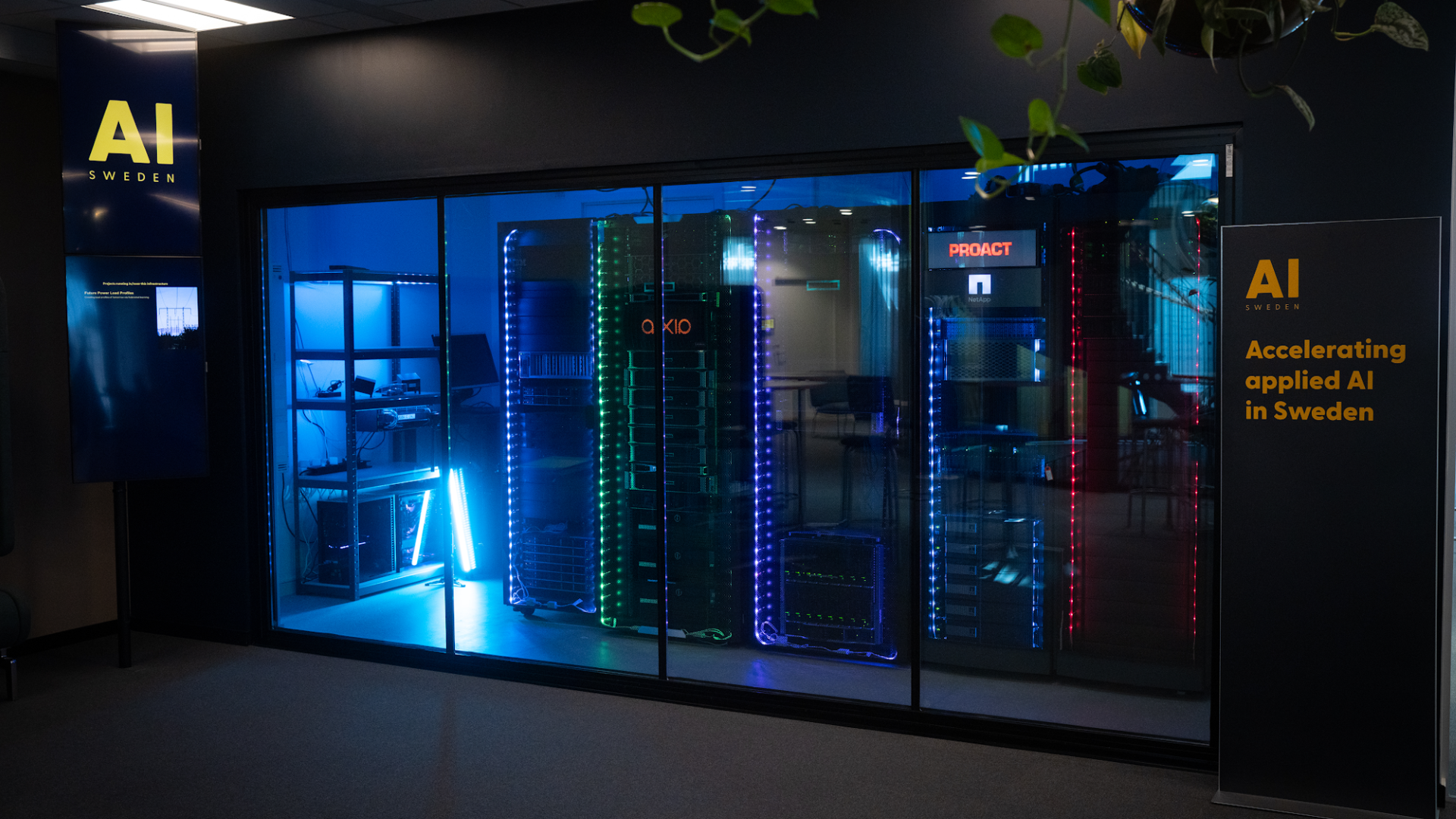
A significant step has been taken within the electrified flexible industry initiative. For the first time, an automated data flow has been established between companies in the Vårgårda industrial area and AI Sweden.
This means that data from actual industrial processes can now be collected, transferred, and made available for analysis in an AI environment in near real-time. Although the technology behind data pipelines is well-established, this marks an important milestone in the project. For the first time, the entire chain is functional, from the industrial data source to the AI environment.
– The greatest challenge in this type of project is often connecting the industry’s local systems with central analysis environments in a manner that is both secure and stable. What we have built now is the digital highway. Seeing data stream into the data lab in near real-time is fantastic confirmation that the infrastructure is working, says Max Petersson, Senior Tech Lead at AI Sweden and responsible for the integration.
The new data flow creates the necessary conditions for using artificial intelligence to analyze energy consumption (kWh) and power utilization (kW), identify patterns, and develop new methods for data-driven decision-making. This is a fundamental prerequisite for developing solutions that help industry use energy more intelligently and with greater flexibility.
Industrial companies generate vast amounts of data every day, but value is only created when that information can be analyzed and translated into practical action.
Through the new connection between Vårgårda and AI Sweden, data from real-world operations can be used to develop and test AI-based solutions. In the long term, this can contribute to predicting energy needs, reducing power peaks, optimizing processes, and creating better decision-making support for companies.
This milestone also demonstrates that the digital infrastructure required for the industry of the future is beginning to fall into place. When data can be shared and analyzed securely between different stakeholders, new opportunities are created to meet challenges related to electrification, energy supply, and competitiveness.
The electrified flexible industry initiative brings together companies, energy utilities, grid owners, researchers, and technology actors to develop solutions that enable smarter energy use.
Through advanced digitalization, data sharing, and AI, the project develops and tests new ways of working in real industrial environments. The goal is to create greater flexibility in the energy system by helping companies adapt their energy use according to supply and demand.
In this way, the industry can continue to electrify while the load on the power grid is reduced. The ambition is to strengthen both the competitiveness of companies and society’s ability to meet future energy needs.